










































对于有指征的乳腺癌患者,虽然既往大多通过手术、术后辅助化疗和放疗进行治疗,但是术前新辅助化疗的使用正在不断增加;不过,对于各种生物学亚型乳腺癌的新辅助化疗使用趋势,此前尚无评价。美国规模最大的综合医学中心、最近两年连续荣登美国最佳医院排名榜首的梅奥医学中心对此进行了大数据分析。
2018年5月21日,美国乳腺外科医师学会和肿瘤外科学会《肿瘤外科学年鉴》在线发表梅奥医学中心的研究报告,评价了新辅助化疗用于不同生物学亚型乳腺癌的时间变化趋势。
该研究根据美国外科医师学会和美国癌症学会的全国癌症数据库,确定2010年1月~2015年12月接受根治手术并且进行化疗的所有浸润性乳腺癌年龄≥18岁患者共31万5264例,根据不同的激素受体(HR)和人表皮生长因子受体2(HER2)状态进行分层,通过趋势检验进行时间比例趋势分析。
结果发现,接受辅助化疗、新辅助化疗的患者分别为25万1726例(79.8%)、6万3538例(20.2%)。
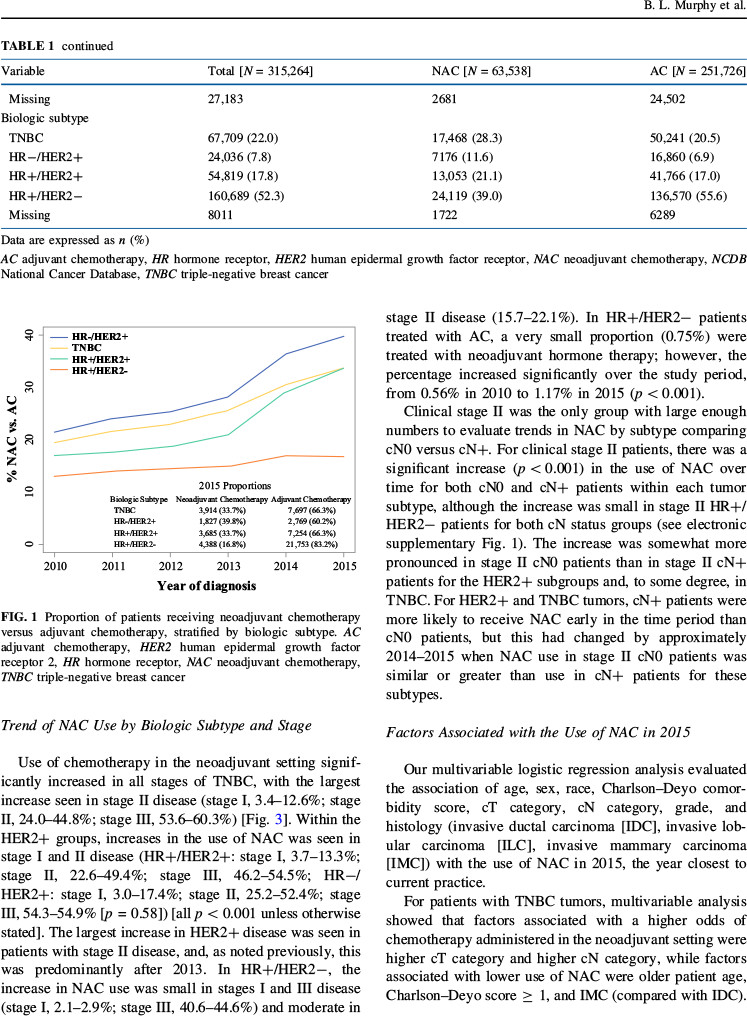
2010~2015年,所有生物学亚型乳腺癌的新辅助化疗比例显著增加(P<0.001)
HR阴性HER2阴性(19.5%~33.7%)
HR阴性HER2阳性(21.5%~39.8%)
HR阳性HER2阳性(17.0%~33.7%)
HR阳性HER2阴性(13.0%~16.8%)近年来显著少于其他亚型(P<0.001)
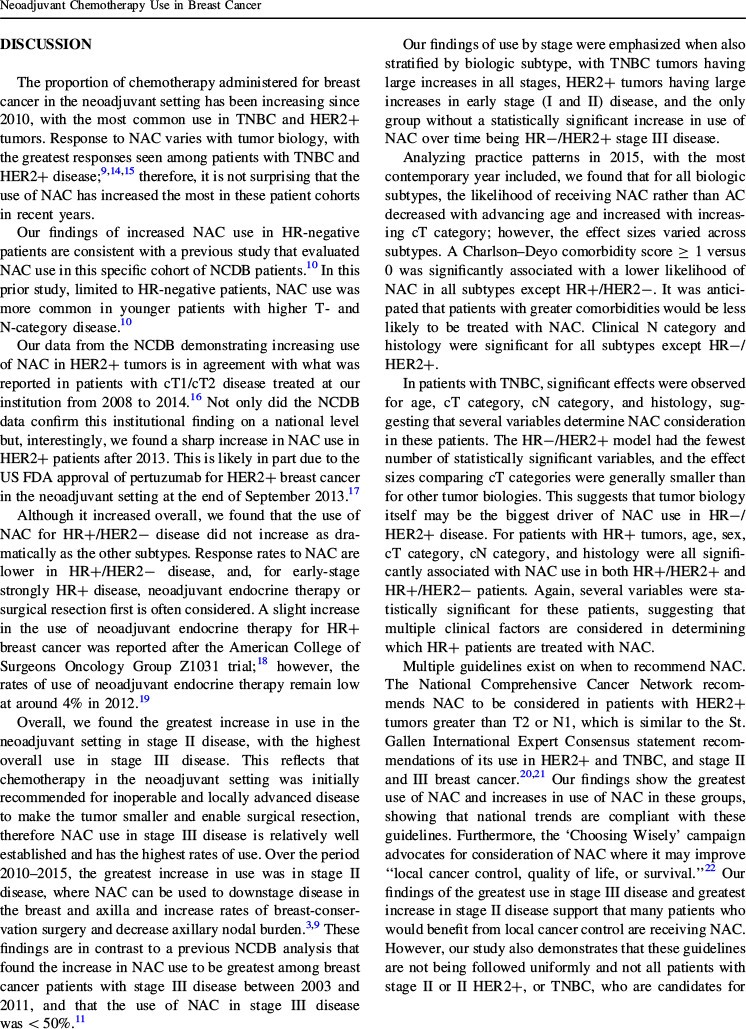
因此,对于接受化疗的乳腺癌患者,所有生物学亚型的新辅助化疗均有增加。三阴性乳腺癌和HER2阳性乳腺癌的新辅助化疗使用率最高,这些亚组的新辅助化疗使用率为HR阳性HER2阴性乳腺癌的两倍。
Ann Surg Oncol. 2018 May 21. [Epub ahead of print]
Neoadjuvant Chemotherapy Use in Breast Cancer is Greatest in Excellent Responders: Triple-Negative and HER2+ Subtypes.
Brittany L. Murphy, Courtney N. Day, Tanya L. Hoskin, Elizabeth B. Habermann, Judy C. Boughey.
Mayo Clinic, Rochester, USA.
BACKGROUND: While breast cancer has historically been treated with surgery followed by adjuvant chemotherapy (AC) and radiation when indicated, neoadjuvant chemotherapy (NAC) use is thought to be increasing; however, the trends of its use in various biological subtypes have not been evaluated. We sought to evaluate the trend of NAC use over time by biological subtype.
METHODS: We identified all patients with invasive breast cancer who underwent curative intent surgery and were treated with chemotherapy from 2010 to 2015 from the National Cancer Database. An unadjusted analysis of trends in proportions over time was performed using Cochran-Armitage trend tests stratified by hormone receptor (HR) and human epidermal growth factor receptor 2 (HER2) status.
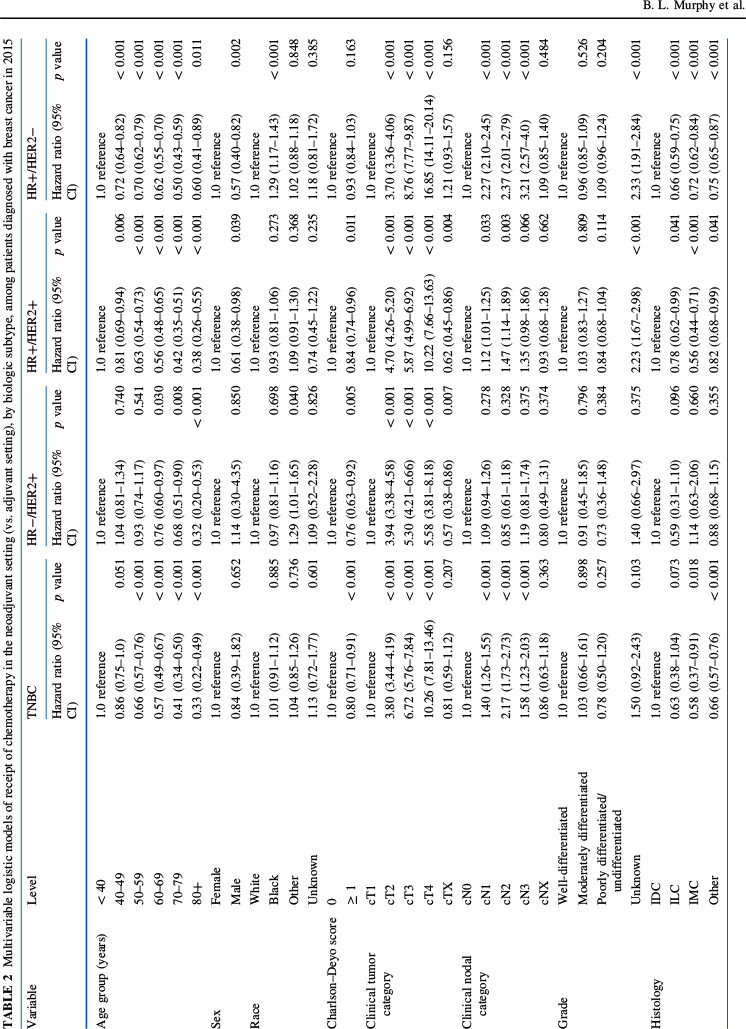
RESULTS: Of 315,264 patients who received chemotherapy, 251,726 (79.8%) received AC and 63,538 (20.2%) received NAC. From 2010 to 2015, significant increases in NAC use were seen in all biologic subtypes (all p<0.001). The highest proportions and greatest increases in proportions of NAC were seen among triple-negative breast cancers (TNBC; 19.5-33.7%) and HER2+ (HR-/HER2+, 21.5-39.8%; HR+/HER2+, 17.0-33.7%) tumors. HR+/HER2- tumors also had a statistically significant increase in use but this increase was less dramatic (13.0-16.8%) and NAC use in recent years was significantly lower than in other subtypes (p<0.001).
CONCLUSION: Within patients receiving chemotherapy for breast cancer, its receipt in the neoadjuvant setting has been increasing among all biologic subtypes. The highest use of NAC is in TNBC and HER2+ disease, with use in these subgroups being twice as frequent as in HR+/HER2- disease.
DOI: 10.1245/s10434-018-6531-5





 苏公网安备32059002004080号